

Physical Safety in Shibari – Anatomy, Nerves, First Aid
Shibari is edge play, meaning that you run the risk of getting permanently injured or even dying. There, we’ve scared you. So what does this mean in practice?
When we tie, we put the body in anatomically awkward positions with pressure on very small areas of the skin and flesh. Add suspension to the mix, and you have very fertile ground for nerve injuries – both from the position and from the compression. There’s also risks associated with restricting blood circulation – while usually totally benign, this is where the “death” part comes in. Cut blood flow to the head and you’re done, and pooling blood in big limbs for too long can lead to shock.
You would think that you’d definitely know if something’s wrong, but nerves and circulation issues are sneaky little bastards and can be easily missed if you don’t know what you’re looking for. Staying aware of risks and sensation changes is key.
Rope itself isn’t dangerous. The danger lies in doing stupid shit without conscious efforts to mitigate risks.
Emergency Cheat Sheet
1. Nerve Safety for Shibari
Our nerves take care of different functions: sensation, movement, and coordination. When we injure a nerve, we are affecting one or more of these functions. A nerve injury from shibari can mean anything from having a numb spot on your thigh to not being able to use your hand for several weeks.
Nerves are most vulnerable where there’s no flesh to pad them: joints and bony areas. For that reason, we usually tie on muscles, but sometimes people compromise because putting pressure on muscles often results in more numbness. The longer you compress a nerve, the longer the recovery time.
What can happen to nerves in shibari?
Nerves are also sensitive to stretching, either from actually pulling on limbs or just from a limb being bent and twisted for a long amount of time. Most people know the numbness you get in your pinky after being on your phone for too long – that’s what happens in shibari too. Almost all nerve injuries in shibari happen during suspension, especially when ropes press into the middle of the upper arm.
Types of nerve problems in shibari:
- Compression. The ropes or laying on a limb is putting pressure on the nerves.
- Stretching. The body position is straining or putting pressure on the nerves.
- Shearing. The ropes are putting both pressure and stretching or twisting the nerves. These injuries tend to be the hardest to heal.
- Blood circulation. The blood flow of the nerve is restricted. The symptoms tend to appear really fast (and subside fast too) if the problem is with blood circulation.
How do I know if it’s nerves?
Both blood restriction and nerve compression or stretching can result in numbness, but only nerve problems present with asymmetric numbness. So if just half of your hand is numb, or you can’t feel the outside edge of your leg, there’s something going on with your nerves.
Symptoms of nerve issues in shibari:
- Asymmetrical numbness
- Electric or burning pain
- Muscle weakness
What do I do if a nerve issue appears?
DO NOT tough it out! It will not get better, only worse. Nerve injuries worsen over time, so promptly ask for change if anything feels weird. The longer you wait, the longer you have to recover. Here’s some tools you can use when nerves get wonky:
- Take the pressure off. Get the whole person or at least the affected body part out of suspension. Don’t cut suspension lines, it’s more safe to bring the person down in a controlled way.
- Move the ropes. Shift the pressure of the ropes to a different spot. This should work in seconds if rope placement is the problem.
- Move the body. If shifting the ropes doesn’t help, the problem is probably body position. Straighten the elbow, untwist the shoulder, bring the body to a neutral position. Find soft movement in the affected area, but don’t stretch or massage.
- Untie. If movement is affected, anyone feels uncomfortable continuing the session and/or the above measures didn’t immediately work, untie the person (or at least the affected body part).
- Repair & Analyse. Find a way to offer each other support, it’s scary when injuries happen. Try to understand what happened and learn from it. Make a recovery plan.
- Rest & Recover. Let the nerve rest. You can use anti-inflammatory medication for any pain and swelling. Avoid pressure on the area (like sleeping on that side or doing more suspensions). See a doctor or physiotherapist if needed, for example if you are worried about persistent symptoms or muscle weakness causing injuries in day-to-day life.
Which nerves most commonly get injured?
There are a number of nerves that can get injured during shibari, most of them located in the arms. We are most concerned about injury of motoric nerves, that will make life harder because your muscles and coordination are affected.
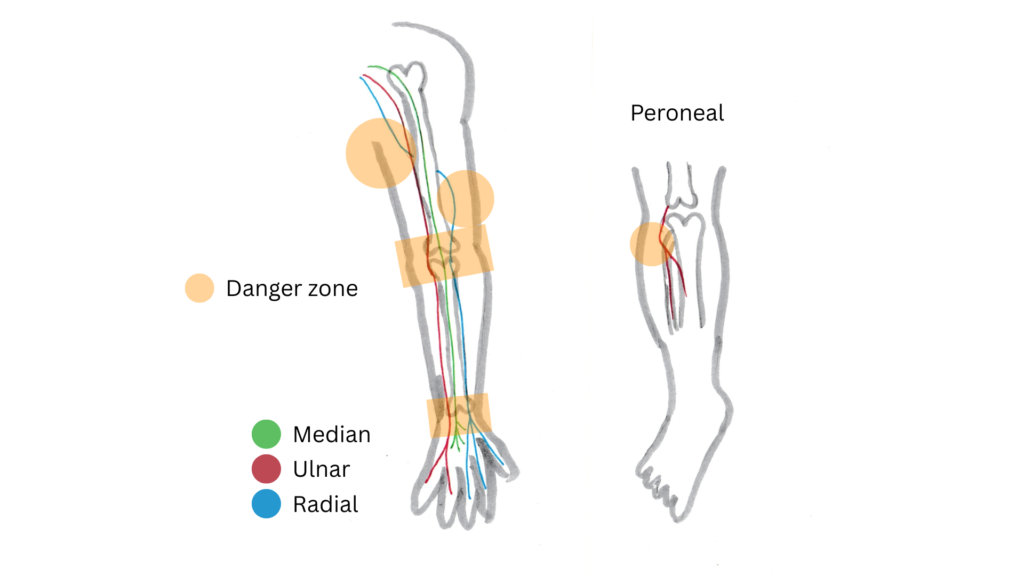
Copyright: Ceci Ferox/Karada House
3. Blood Circulation Issues When Getting Tied
The most common risk with restricted blood flow in shibari is that the numbness can mask nerve injuries. If your whole hand is tingling or doesn’t have sensation, it’s very hard to notice that specifically your pinky is affected. There are, however, some risks directly linked to restricted blood flow itself.
Arterial compression. As long as blood is getting into the limb, you’re more or less safe even if you get numb (vein compression). If blood can’t get in, you’re in trouble. Our tissues need oxygen, and shit will go sideways if they don’t. Muscles, nerves, and skin can get damaged. You can notice arterial compression by looking out for the signs:
- A limb got darker at first, but then it got lighter
- A limb looks pale, grayish, or dull
- When you press in on the palm of the hand or sole of the foot, or squeeze the tip of the finger and the nail, the imprint or nail doesn’t return to pink/reddish quickly
- Loss of strength
- Pain in the limb
Pooling blood & shock. If a limb is tied up and hanging down, or just tightly tied for a long time, you run the risk of reperfusion injury. What this means is that the blood gets cold and loses it’s oxygen, and when it then comes back to the body it can cause shock and injury to the kidneys. The bigger the limb is, the bigger the danger. Any upright positions with circulation to the legs is blocked are especially risky as blood very easily pools in the legs if the muscles are not active. This is called harness hanging syndrome, and happens most commonly when tying on hashira or other vertical objects. The warning signs might not come up at all, so the best course of action is to treat all blood compression in the legs as potential risks. Here’s how you mitigate:
- Untie slowly and gradually. Fist, take the pressure off the harness but leave it on. 5-10 minutes later, start slowly untying it.
- Use a seated recovery position. If you can’t untie slowly (for example if the only harness was a hip harness), make sure not to immediately lie the person down. Instead, lean them on something and bring the knees to heart height.
4. Other Physical Risks in Rope Bondage
We mostly concern ourself with nerve issues and circulation problems while tying. There are some other, less frequent, issues that can come up. Fainting can be scary, and sometimes life-threatening. Falling can happen for a number of reasons from losing your balance to a suspension point falling from the ceiling. The weird positions we tie each other in can cause damage to joints, and rope can cause annoying irritation to the skin.
5. Risk Assesment & Mitigation
There are real, and sometimes serious, risks in shibari. You want to be prepared and mitigate them as well as you can.
Before the session: understand the risks of what you’re about to do and think about how you will mitigate the risks. Check in about any previous injuries and flexibility limits or hyperflexibility. Talk about how you will know if something goes wrong while you’re tying (our recommendation: the bottom is responsible for communicating changes in their body), and if you will use specific language or communication tools for alerting or checking in (like a traffic light system).
What is a Risk Profile?
A risk profile is a risk assessment and plan you make for yourself based on your own desires and boundaries.
To make a risk profile, answer these 6 questions:
1. What kind of play do I like to engage in? (Desires)
2. What are the risks of that play?
3. How likely are the risks?
4. How severe are the risks?
5. How can I mitigate the risks?
6. Which risks am I willing to take? (Boundaries)
During the session: if you’re getting tied, make sure to regularly check for sensation loss. Hands you can do yourself: scratch different fingers on the inside & outside to feel for asymmetry. If you’re worried about any other body part, ask your rope partner to scratch – for example the outside of the lower leg or on your shoulder. If something feels off, err on the side of caution – you don’t have to stop the session completely because you need to untie one body part, so don’t power through just so the fun wouldn’t end. Here’s how you can mitigate risks in suspension:
- Reduce load on sensitive areas like the lower part of the upper arm by adding more points of support, choosing the right angle, and/or avoiding loading the wraps on those body parts.
- Avoid static positions. Find ways to adjust ropes, move the body, and shift weight by making small height adjustments, tying close to the ground, or through transitions.
- Spotters. Don’t tie above your actual skill level without asking a more experienced tyer to spot for you (keep and eye and step in when needed). At Karada House rope events, we always have someone available to spot for you.
After the session: if an injury happened despite these precautions, stay calm. Shame, defensiveness, and judgement will only make the recovery harder and create a rupture in the relationship. Analyze what happened – was it a freak accident, or is there something you need to tweak in your communication? Try to learn from what happened.
6. What next?
Now you got the basics, it’s important to understand the safety considerations for each harness and suspension position you tie. There is no universal truth about where exactly nerves are the most exposed, and each body is different. Some people have more flesh protecting the arms, and some less. Some people are stiff while others are hypermobile. The only way to really get it is to continue always learning.
Progress at a conservative pace and be wary of the moment when you feel you know everything – you’re probably wrong. The real risks materialize in suspension, so don’t rush it.
At the Karada House Rope School you will get comprehensive understanding of anatomy and safety in each class you attend. We will help you with choosing the right tension and placement for the harness you’re using, and the specific body you are tying. Our suspension classes offer a deep dive into understanding how to choose the right angles, and how to communicate when something’s off.
Sources:
Khodulev V, Klimko A, Charnenka N, Zharko M, Khoduleva H. Acute Radial Compressive Neuropathy: The Most Common Injury Induced by Japanese Rope Bondage.