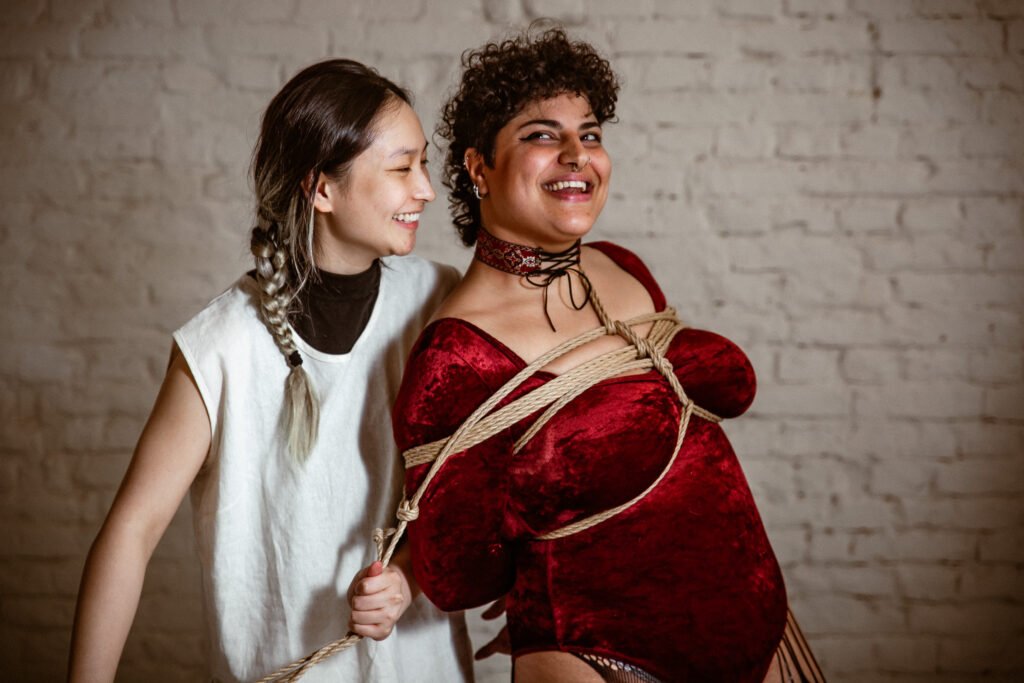
A two-day deep dive into the building blocks of shibari: how structures are created, and how they shape bodies.
This weekend brings together two complementary workshops based on our Rope Structures series, that move from understanding how ties work to exploring what they do. On day one, Building Blocks & Design Choices focuses on the foundations of structure: harness construction, frictions, and the design decisions that make ties stable, adaptable, and expressive. You’ll develop a modular way of thinking about rope, moving beyond fixed patterns into understanding the logic behind them. You will learn a gote (arms behind the back tie), a mermaid tie, and a hip harness.
On day two, Restricting Bodies, we apply those same building blocks to create intentional restriction. We’ll explore how rope can shape posture, limit movement, and create specific physical and emotional experiences, working with positions, connections, and simple setups that bring structure into the body. You will learn Ceci’s arms front harness, a futomomo, a crab tie, and how to connect body parts to harnesses and furniture.
Together, these workshops offer a practical and exploratory approach to shibari: not just learning ties, but learning how to build and use them with intention. The focus throughout is on adaptability, body awareness, and making informed choices, whether you’re tying for aesthetics, play, or deeper exploration.
You can join for one day or both, but attending the full weekend will give you the clearest sense of progression from structure to application. Buy a full weekend ticket here, or navigate to the descriptions of each day for a one-day ticket.
Join us for the full weekend, or pick the day that suits you best:
Building Blocks & Design Choices
Shibari is not just about what you tie, but how and why you build it.
The first day of our Toolbox weekend focuses on the underlying structures that make ties functional, adaptable, and expressive. Instead of learning one fixed pattern, you’ll develop a modular understanding of rope: how suspension harnesses are constructed, how frictions shape tension and stability, and how small design choices change both the look and feel of a tie.
We’ll work with core building blocks: wraps, frictions (X, L, half-moon), and basic harness blueprints, learning and understanding how to build a gote (TK/box tie), a hip harness, and a mermaid tie. From there, we’ll explore how different traditions and styles approach similar structures, and what happens when you start modifying the blueprint.
Along the way, we’ll look at body geometry, balance, and how to adapt ties to different bodies and intentions. The goal is not to memorize patterns, but to understand the logic behind them so you can build, adjust, and tie with more confidence.
This workshop is ideal for those ready to move beyond fundamentals into more intentional and structured tying.
What to expect
- Hands-on work with core structural elements: wraps, frictions, and harness foundations
- Introduction to key frictions (X, L, half-moon) and how they affect tension and stability
- A modular approach to building and modifying harnesses rather than memorizing patterns
- Gote, hip harness, and mermaid tie
- Exploration of different tying styles and how design choices shape outcomes
Restricting Bodies
The second day of our toolbox weekend explores how to use rope to create clear, intentional restrictions in the body — whether through tying limbs together, shaping posture, or connecting a body to itself, another person, or an object. We’ll work with positions such as hogties, folded and asymmetrical shapes, and tying to furniture, using accessible tools like single column ties, basic harnesses, and frictions.
To continue growing your shibari harness toolbox, you will learn Ceci’s arms front chest harness, a structured futomomo, and a crab tie. You can also continue practicing harnesses from the previous day’s workshop. This workshop gives you a first taste of techniques you will need for moving into shibari suspensions.
We’ll also cover practical considerations like transitions, adaptability for different bodies and flexibility levels, and maintaining awareness of safety while working with restriction.
This is a hands-on, exploratory space to better understand how rope shapes bodies, and how to make intentional choices about the kind of experience you’re creating.
What to expect
- Practice with tying body parts together and creating restrictive positions
- Exploration of classic positions (e.g., hogtie, M-shape, kata-ashi) and their variations
- Working with harnesses, single column ties, and basic frictions to build restriction
- Attention to how restriction changes sensation, movement, and experience
- Guidance on adapting positions for different bodies, flexibility, and contexts