Language Matters: Rethinking How We Speak About Roles in Rope and Kink
In the world of kink—and especially rope bondage—the words we use carry a weight that is often left unrecognized. They frame our experiences, define our roles, and shape how we relate to one another. Too often, it seems to me, the language we lean on reinforces outdated hierarchies, dehumanizes participants, and subtly erodes the mutuality that lies at the heart of intimate play.
If you’ve been in the rope community, even for a short time, you will likely come accross the terms rigger, rope bunny, top, bottom, and model . From what I have observed, some of this vocabulary has become so embedded in the rope community that we rarely question it. Yet, when we take a moment to reflect, we might find they tell a troubling story about power, recognition, and the value of experience.
Before I continue in this direction, I want to clarify that this is not a call to forbid the use of these terms with the permission or at the request of the person who wishes to be identified as such. I do not intend to discourage anyone from using them if they have thoughtfully considered them and chosen to identify with them. It is however a plea against the general use and normalization of these terms.
The Problem of the Language of Dehumanization
The term rope bunny has been largely abandoned within the rope community here in Vancouver, but I see it often online and in other rope communities.Though often used playfully—can be infantilizing or even fetishizing. A bunny is a prey animal. It’s innocent, helpless, fragile. The use of the term conjures images of someone who exists solely for the pleasure of being tied, cute and squirmy and ultimately secondary to the person doing the tying. It’s a term that flattens complexity and can invisibly frame people in rope as accessories, rather than as partners with their own skill, presence, and agency.
The Problem with the Language of Display
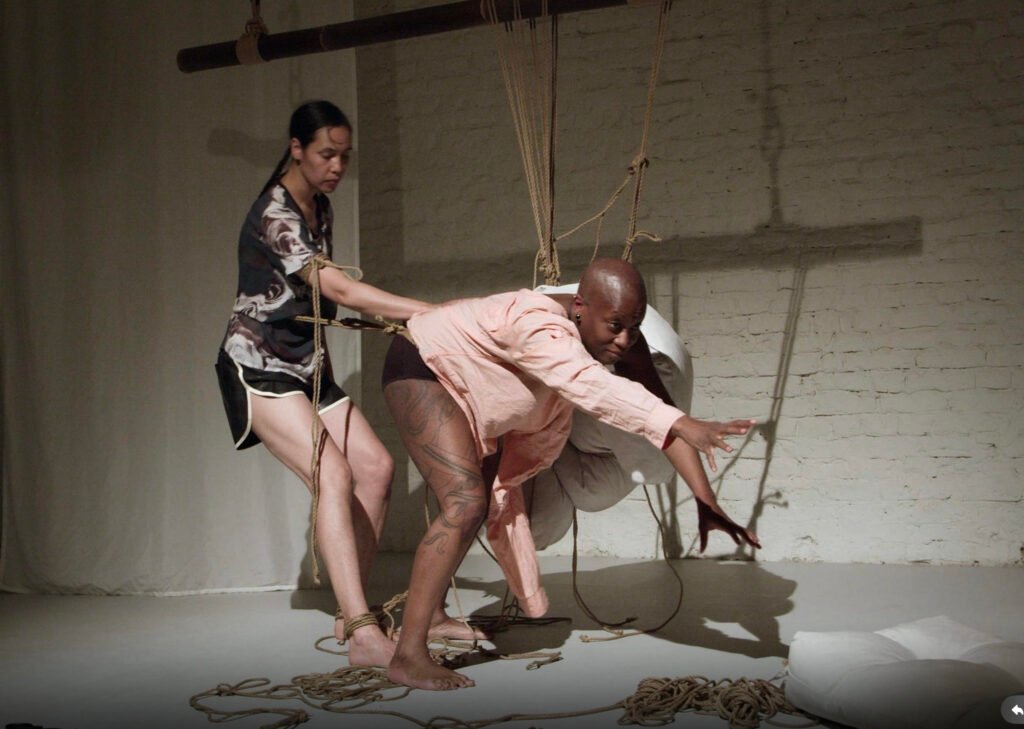
Let’s turn to the use of the word model. This word is used often, including within the community which I am a part of. On the surface, it sounds benign—even respectful. After all, people tied in ropes often evoke a sense of beauty or aesthetics. But when someone is called a model, it implies a passivity.
This word has two meanings: in some cases, a model isn’t a thing in and of itself. It’s the representation of another thing. It’s often smaller, more fragile, a rough version, or used to test whether or not something works or looks good. I would argue here, that even the use of the term “bunny” could be seen as preferable, given that, at the very least, a bunny is a thing in it’s own right, but both of these terms lead to the inference that a person in rope is less-than human.
People tied in ropes often evoke a sense of beauty or aesthetics. But when someone is called a model, it implies a passivity.
A model is also someone to pose, to be observed, to display someone else’s artistry. When we use this term, the person in ropes becomes a pedestal for another’s creation, a canvas rather than a co-creator.
In performances, photos, and even casual jam sessions, we often hear praise directed at the rigger: “That tie was amazing,” or “They’re such a talented top.” Rarely do we hear equal recognition for the person in ropes. This asymmetry implies that the person in rope’s experience is the medium through which the person on ropes earns admiration, and that their labor—emotional, physical, erotic—is secondary. I, in fact, have experienced this phenomenon on several occasions. Most notably, after giving my first ever performance, a person came up to me, with what I choose to assume were good intentions, and told me that they were “surprised I contributed so much to the scene!”. I replied politely, but in my head, all I could think was: “without me, there would have been no scene!”.
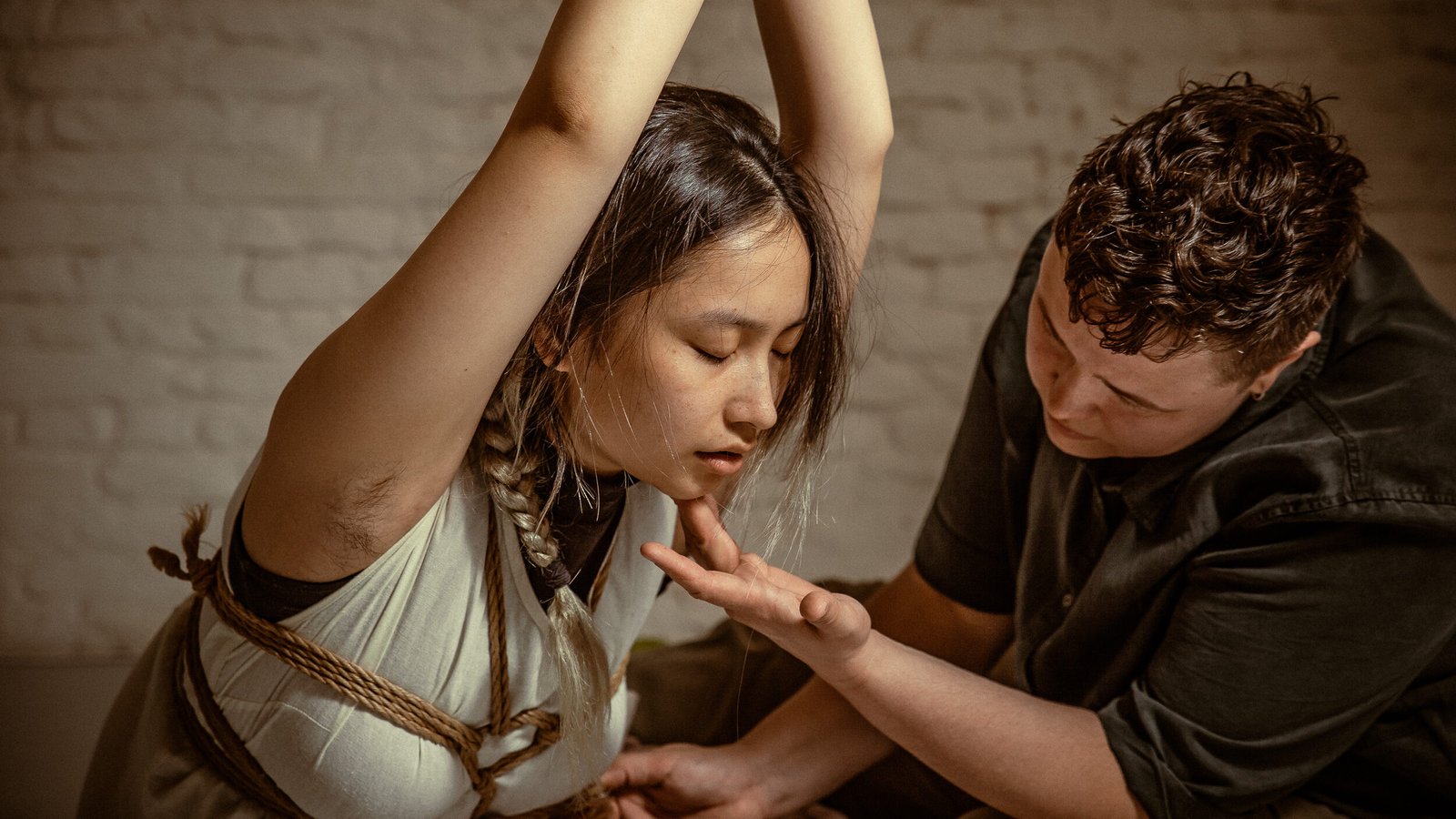
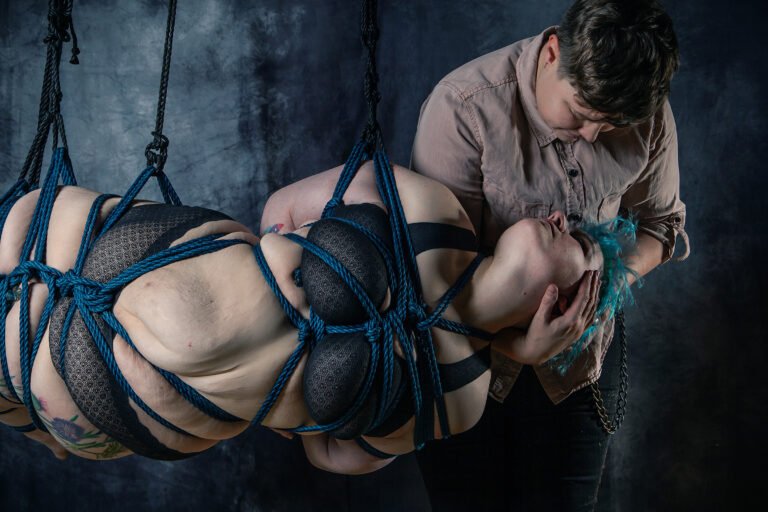
Let’s be clear: being in rope is not a magic trick. It is a skill. It involves (among many other things) breath, tension, endurance consideration, observation, the assumption of risk, and trust. Without the person in rope’s active participation, the rope is just a pile of fiber. Every shape, every suspension, every evocative moment is a collaboration. When we don’t have language that honors both sides of that equation, we risk reinforcing a toxic narrative: that one person creates, and the other is simply used.
Rethinking Roles and Respect
Of course, top and bottom are useful terms in many contexts. They describe power dynamics, preferences, and modes of interaction. But we must resist the urge to let them become rigid hierarchies. Power exchange doesn’t require a power imbalance in worth. Roles in rope can and should be fluid, negotiated, and named with intention.
Power exchange doesn’t require a power imbalance in worth.
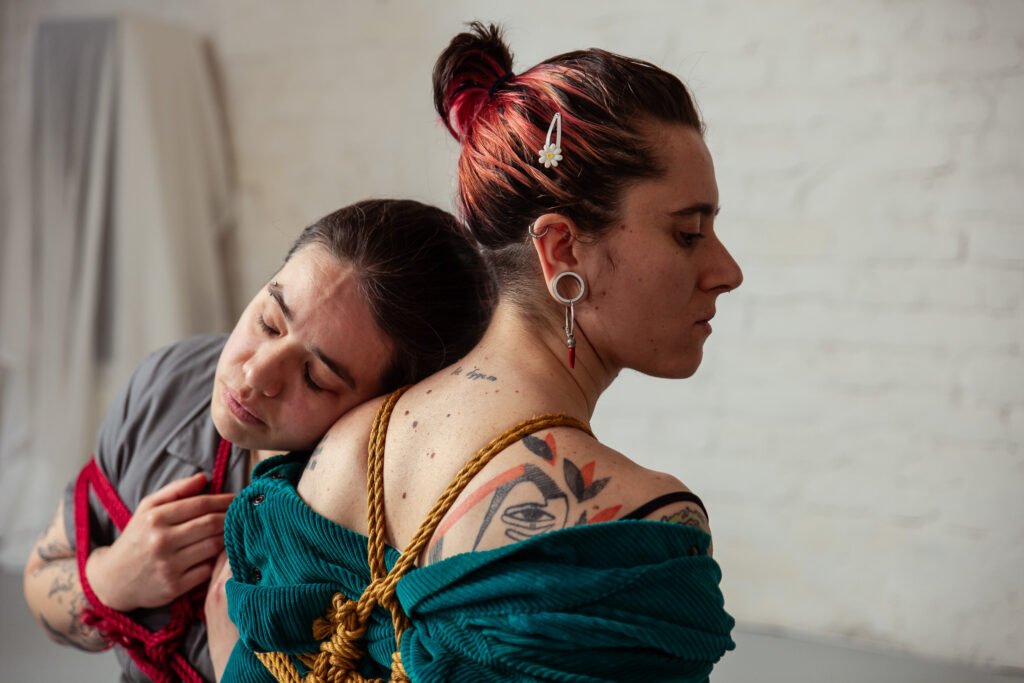
Some in the community have begun shifting language: using rope partner instead of model or rope bunny, saying tying with rather than tying up. These changes may seem small, but they acknowledge that the person in rope isn’t a prop—they’re an integral, intelligent, feeling part of the scene.

Making the Invisible Visible
It’s easy to idolize the technical virtuosity of a rigger, to be seduced by the aesthetics of rope. But if we want a kink community that’s rooted in consent, reciprocity, and authenticity, we have to start by seeing each other fully. That means naming the skill and vulnerability of people in rope. It means inviting those in rope to speak about their experiences, to lead workshops, to be visible beyond their bodies. It means questioning the language we inherited and being brave enough to change it. Because language doesn’t just describe reality—it creates it. And in the spaces we tie, love, and play, we deserve a reality that sees us all as whole.
About the author
Emmy (she/her)
Emmy, originally from England, with an academic background in Law, is co-founder of Studio Allegory in Vancouver, Canada. She has been tying for over 3 years, and enjoys teaching rope and other forms of kink and intimacy, with a focus on consent, communication and other meta-aspects.